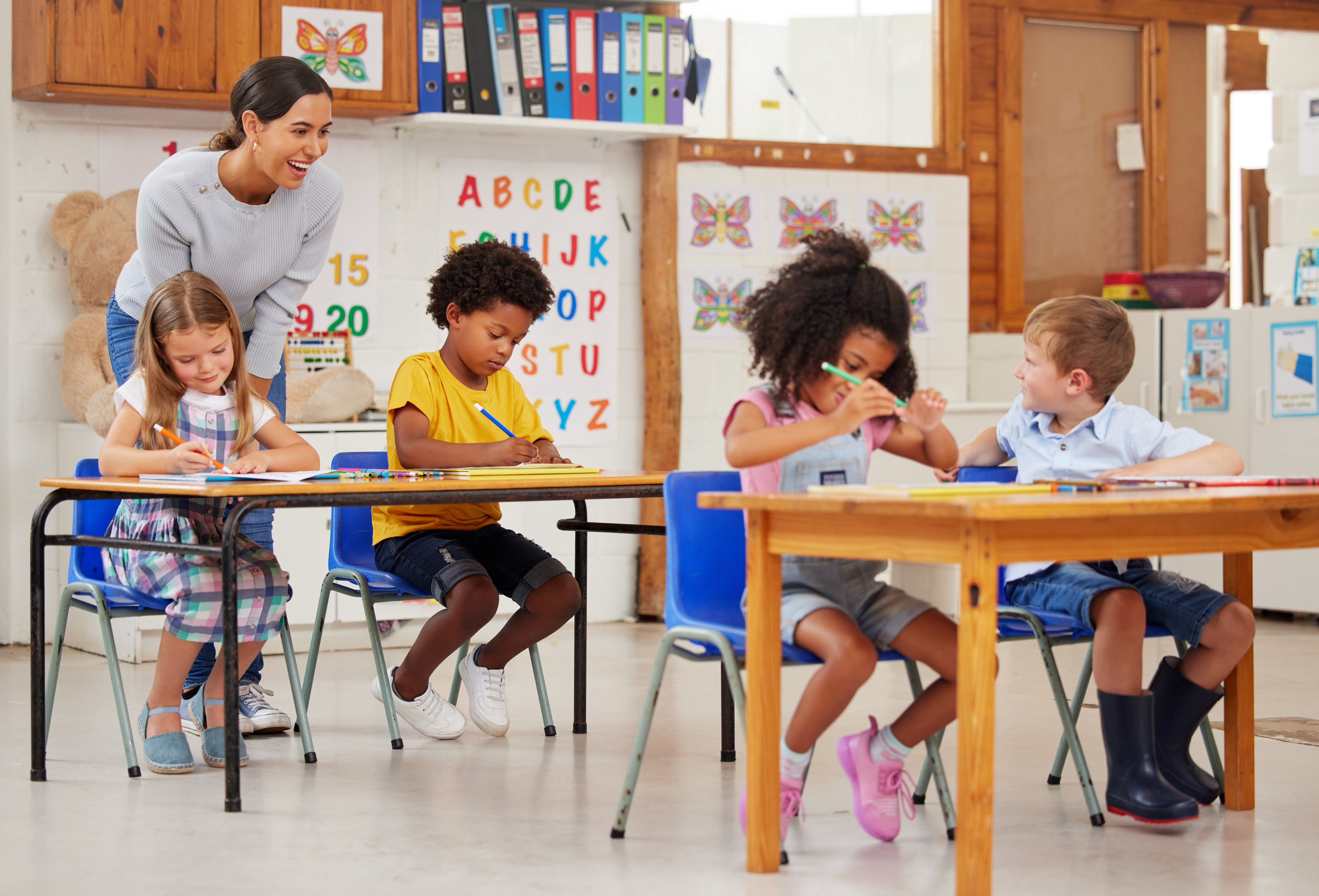
Motivating students starts with making learning meaningful and engaging. Children stay interested when lessons connect to their everyday lives, include hands-on experiences, and encourage curiosity. Giving students choices, celebrating progress, and creating a classroom where questions and mistakes are welcomed helps build lasting confidence. Understanding “How can you motivate students?” begins with creating an environment where learning feels valuable, enjoyable, and rewarding.
Every child begins with a natural curiosity about the world, but that enthusiasm can fade when learning feels repetitive or disconnected from real life.
“How can you motivate students?” The answer starts with understanding their interests, encouraging active participation, and creating a classroom where students feel comfortable asking questions and taking risks.
When students see purpose in their work, motivation grows. To support this journey, we suggest you check out our family resources for extra help at home.
At The Charter School of Excellence, we build this culture every day. We believe that passion for learning comes from a caring community. Our teachers work hard to make each lesson meaningful, so students want to participate. We invite you to see our vibrant campus life in action.
Recognizing effort instead of natural talent helps children develop a healthier attitude toward learning.
Saying "you worked hard" instead of "you are smart" teaches students that success comes from persistence and dedication. They begin to understand that challenges are part of the learning process rather than evidence that they cannot succeed. This perspective builds resilience and encourages children to take on more difficult tasks with confidence.
Focusing on effort also helps students see mistakes as opportunities to improve instead of reasons to give up. They learn that abilities grow through practice, patience, and consistent effort. Teachers and parents play an important role by recognizing progress, determination, and problem-solving rather than only celebrating high grades. Over time, this approach builds confident learners who are willing to face new challenges.
Learning becomes more engaging when students work together toward shared goals. Group discussions, collaborative projects, and classroom activities encourage children to exchange ideas, solve problems, and learn from different perspectives.
Working with classmates also strengthens communication skills and creates a stronger sense of belonging within the classroom community.
Collaborative learning benefits every student involved. Children often explain ideas in ways that make difficult concepts easier for classmates to understand. Teaching others also strengthens the understanding of the student sharing the information.
Instead of focusing only on individual achievement, students learn that cooperation and shared success are valuable parts of education.
Students become more motivated when they understand how today's lessons connect to tomorrow's opportunities.
Many children already have dreams about future careers or personal goals. Showing how subjects like math, science, reading, and writing relate to those ambitions gives classroom learning greater purpose. A future engineer, artist, teacher, or entrepreneur all rely on skills developed throughout school.
Teachers can strengthen these connections by inviting guest speakers, sharing real-life examples, or discussing how different careers use classroom knowledge every day. Parents can reinforce the message by explaining how reading, communication, and problem-solving help them in their own work. These conversations remind students that education prepares them for future success instead of simply helping them complete assignments.
Students stay engaged when learning experiences change regularly. While routines create structure, introducing different teaching methods keeps students interested and curious.
Videos, classroom discussions, educational games, guest speakers, outdoor activities, and interactive projects bring new energy to lessons. Each change in format encourages students to stay focused and actively participate.
Using different learning activities also helps address a wide range of learning preferences. Some students excel during hands-on experiments, while others perform better through independent reading or creative projects. Rotating between teaching methods gives every child opportunities to learn in ways that match their strengths while continuing to develop new skills.
One of the strongest forms of motivation comes from the satisfaction of mastering a new skill. Students who experience steady progress become motivated by their own achievements rather than external rewards. Teachers can build this confidence by dividing complex concepts into manageable steps, giving students opportunities to experience success throughout the learning process.
Giving students opportunities to revise assignments or retake assessments reinforces the idea that learning continues beyond a single grade. Instead of viewing mistakes as permanent failures, students recognize that improvement comes through practice and reflection.
This growing confidence encourages them to tackle increasingly difficult challenges. It also demonstrates “How can you motivate students?” through meaningful progress instead of relying only on rewards.
Students learn more effectively when mistakes are treated as valuable parts of the learning process rather than something to fear.
Teachers who openly discuss their own mistakes help normalize setbacks and create a classroom where students feel comfortable trying new ideas. This positive environment encourages participation because students understand that mistakes are expected while learning.
Discussing errors helps students strengthen critical thinking and problem-solving skills. Instead of focusing only on the incorrect answer, they learn to examine what happened and identify better approaches. This reflection builds persistence, confidence, and independence. Students who view mistakes as opportunities continue asking questions, exploring new ideas, and developing stronger learning habits throughout their education.
If your child only learns for stickers or treats, it is important to slowly shift the focus. Start by praising the effort they made to earn the reward. Talk about how good it feels inside to solve a problem all by themselves. Over time, they will begin to value the feeling of learning itself.
A safe classroom is essential because fear shuts down the learning part of the brain. When students are not afraid to be wrong, they take more risks and ask more questions. This leads to deeper learning and a more active classroom culture. Safety creates the freedom needed for true intellectual exploration.
The easiest way is to show genuine interest in what your child is learning at school. Ask them open-ended questions about their day and their lessons. Read the same book they are reading and have a conversation about it. This involvement sends a clear message that their education is valuable.
Your child is capable of incredible things when they find the right environment. At The Charter School of Excellence, we build that environment every single day through passion and care.
We invite you to visit our public charter school and see the excitement for yourself. We offer a unique combination of extended care, strong academics, and a safe campus as a premier charter school in Florida. This is more than just a school; it is a community where your child's future begins right now. Join us today.